Cherry MX Speed Silver vs Gateron Optical: Rhythm Game Showdown
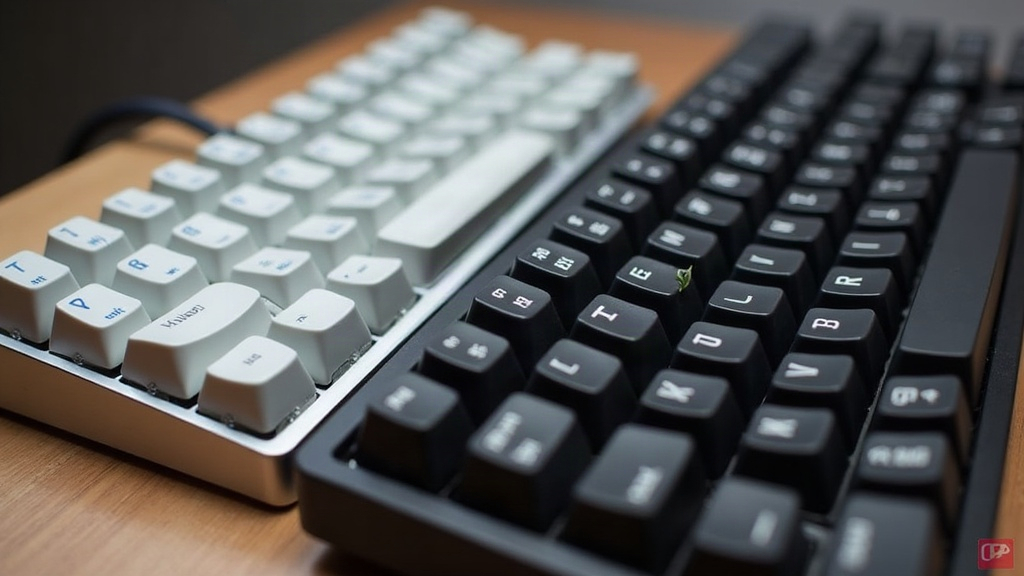
If you’re chasing higher accuracy and faster streams in games like osu!, Etterna, or Quaver, your switch choice matters almost as much as your sensitivity settings. Cherry MX Speed Silver vs Gateron Optical Linears is one of those debates that pops up in every rhythm game Discord server sooner or later. The short version: Gateron Optical switches tend to win for high-BPM play thanks to lower debounce latency, while Cherry MX Speed Silvers stay a reliable, easy-to-find option with excellent travel characteristics.
Why Switch Choice Matters for High-BPM Play
During dense streams, you’re hitting 8 to 16 notes per second. At that pace, every millisecond of actuation distance, debounce delay, and input consistency starts to add up, and it shows up as missed combos or a lower accuracy percentage on your score screen. Two things really drive this debate:
- Actuation distance - how far you have to press before the keypress actually registers
- Debounce time - how long the keyboard’s firmware waits before it trusts that a press or release wasn’t just contact bounce
Cherry MX Speed Silver: The Established Standard
Cherry MX Speed Silvers are linear switches with a 1.2mm actuation distance (versus 2.0mm on a standard Cherry MX Red). That makes them one of the fastest mechanical switches around in terms of pure travel.
Strengths:
- Actuation at just 1.2mm means less finger travel per note
- 45g actuation force feels light and consistent, note after note
- Mechanical, metal-leaf contact is old, proven tech at this point
- Easy to find in boards from Corsair, Razer, and SteelSeries
Weaknesses:
- Traditional mechanical debounce (software-based, usually 5ms or more) can cause double inputs or ghost inputs when you’re tapping at extreme speed
- Metal contact wear adds up over time and can cause chatter, especially if you’re grinding hundreds of thousands of actuations a month (not unusual for a serious rhythm gamer)
Gateron Optical Linears: The Rising Favorite
Gateron Optical switches skip the metal contact entirely and use an infrared light beam to register keypresses. Once the stem drops low enough to block or unblock that beam, the input fires instantly. There’s no mechanical bounce to even worry about debouncing.
Strengths:
- Debounce delay is practically zero, since there’s no physical contact bounce to filter out
- No metal contact wear, which means a rated lifespan up to 100 million keystrokes (compare that to 50 million for most Cherry switches)
- Gateron Optical Red/Yellow variants sit at 1.5mm actuation (close to Speed Silver), and many SKUs come with smoother factory lubing straight out of the box
- Common in boards built specifically for esports and rhythm gaming, like Wooting and a few Keychron optical lines
Weaknesses:
- You need an optical-specific PCB; you can’t just hot-swap these into whatever mechanical board you already own
- The board selection is still narrow compared to the whole Cherry MX ecosystem
- Some players notice a slightly different “bottom-out” feel that takes a session or two to get used to
Head-to-Head Comparison
| Factor | Cherry MX Speed Silver | Gateron Optical |
|---|---|---|
| Actuation distance | 1.2mm | 1.5mm (varies by SKU) |
| Debounce delay | Software-dependent (~5ms typical) | Minimal (optical sensing) |
| Durability | 50 million keystrokes | 100 million keystrokes |
| Board availability | Extremely wide | Growing, niche-focused |
| Cost | Moderate | Slightly higher (board + switch) |
| Best for | General gaming + rhythm hybrid use | Dedicated high-BPM rhythm gaming |
Which Should You Choose?
Choose Cherry MX Speed Silver if:
- You already own a board with hot-swappable Cherry-style sockets
- You split your time between FPS and rhythm games and want one switch that handles both
- You want the cheapest route to a snappy, low-travel feel
Choose Gateron Optical if:
- You’re grinding osu!/Etterna/Quaver seriously, chasing SS ranks or a spot on the leaderboard
- You’re building or buying a new board specifically for rhythm gaming, no compromises
- You want maximum keystroke durability for those marathon practice sessions that run late into the night
Real-World Testing Notes
Community benchmarks from osu! tournament players (using tools like Keyboard Tester Online alongside in-game accuracy logs) consistently show Gateron Optical users reporting fewer “ghost misses” during 200+ BPM streams. That seems to come down to debounce consistency more than raw actuation distance. Still, plenty of top-ranked players stick with Cherry MX Speed Silver boards simply because that’s what they learned on. Muscle memory and hours of consistent practice tend to outweigh small hardware gains anyway.
Conclusion
Both switches hold up well, but if you’re building a dedicated rhythm-gaming rig from scratch, Gateron Optical Linears pull ahead thanks to near-instant debounce response and better long-term durability. If you already own a Speed Silver board, or you need something that works across genres, there’s no pressing reason to switch gear. In practice, the performance gap is a lot smaller than forum arguments make it sound. At the end of the day, the best switch is the one you’ve put thousands of hours into.